
The Power of Light in Design
At certain times of year, your home can feel different almost overnight. Colours appear sharper. Corners feel brighter. Rooms that once felt calm suddenly seem heavier.
It is not the décor that has changed. It is the light.
Natural daylight shifts gradually throughout the year, altering how we experience colour, texture and proportion. Understanding how light behaves in your home is one of the most powerful design tools you have. But first –
Take a Look at What Needs Attention
As our homes become brighter, the light can show up imperfections in our interiors that are less visible in the darker months – for example, paint work might need touching up, a stained cushion or a faded curtain might need be replaced. Identifying these areas can be a great place to have a design rethink and get your home ready for light and sunny days.
Understanding How Light Moves Through Your Home
Every property has its own rhythm. North facing rooms receive cooler, more consistent light. South facing spaces are warmer and brighter for longer periods. East facing rooms feel fresher in the morning. West facing rooms become warmer later in the day.
This matters when choosing colour:
In north facing rooms, cooler light can make greys feel flat or slightly blue. Instead, warmer neutrals with subtle beige or greige undertones such as Farrow and Ball’s Skimming Stone will create a better balance. In south facing rooms, strong yellow undertones can be too much; softer, muted neutrals tend to feel more controlled and elegant. We have been loving Farrow and Ball’s Stony Ground and Stirabout recently as warm classic tones that are not too yellow in the base tone.
East facing rooms respond well to soft warm whites or muted greens such as Farrow and Ball’s Lichen which is a lovely soft green that feels both timeless and modern. West facing spaces can handle slightly cooler tones to balance evening warmth. Farrow and Ball’s Selvedge is a rich blue with cooler undertones that would complement a west facing room.
Sampling paint at different times of day is essential. A colour that works beautifully at midday may feel completely different at dusk so make sure you keep samples in place for at least 24 hours to view the tone in every light.
Making the Most of the Light You Have
Mirrors, glazed ceramics and metallic details help distribute light more evenly. A mirror placed opposite a window can draw daylight further into the room. Positioned at the end of a hallway, it can soften what might otherwise feel like a dark stop. Above a fireplace, it can lift and brighten a focal point. Below you can see this working to great effect with the Fenton Mirror from Industville.
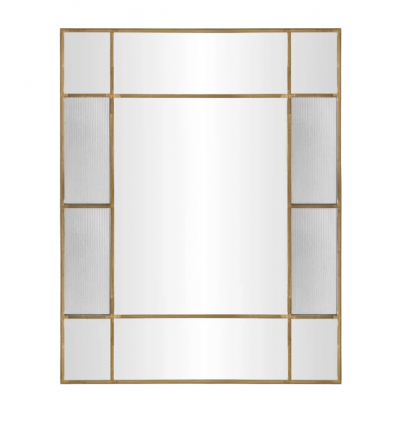
However, always consider what the mirror reflects as although the mirror itself might be in the perfect spot, what is it reflecting might be less than ideal!
Artificial Light Shapes the Evening
Natural light is only half the story. The way your home feels in the evening matters just as much.
Layered lighting creates flexibility:
- Ambient lighting provides overall glow.
- Task lighting supports function.
- Accent lighting highlights architectural details or artwork.
Colour temperature should be chosen carefully. Very warm bulbs can distort neutral paint colours. Very cool bulbs can flatten texture. A balanced warm white usually works best in living spaces, while kitchens and utility areas may benefit from slightly brighter clarity.
If you need help using light in your interiors, get in touch. And for more interior design ideas and practical advice, follow us on Facebook.